
One house rule that I’ve offered to players in the past, and definitely will again, is a more flexible approach to subclassing, inspired by Pathfinder 2e’s “class feats.” So I thought I would give it a cheeky name: à la classe.
A character à la classe is not limited by a single subclass, but can instead select any subclass feature at the appropriate class levels, as long as:
- They meet or exceed the class level “requirement” for that feature. E.g. a level 9 Rogue can take Infiltration Expertise from Assassin or Supreme Sneak from Thief, but not Misdirection from Mastermind, because it is a level 13 Rogue feature.
- If a feature B modifies an earlier feature A, you must first take A as a prerequisite. For example, a level 10 Fighter can’t take Improved Combat Superiority from Battle Master unless they have already taken Combat Superiority.
- A feature cannot be taken twice. Similar to the rules for Combining Magical Effects, if two subclasses offer the same feature, like the Druid’s Circle Spells or the Cleric’s Potent Spellcasting, you can only take it once.
- For the purposes of this house rule, two features with the same name but that are listed twice with different effects must both be taken to get the full benefit. For example choosing the Battle Master’s Improved Combat Superiority at level 10 changes superiority dice to a d10, but does not automatically grant the level 18 Improved Combat Superiority improvement to d12s.
- “You included Circle Spells, but don’t different expanded spell lists have different effects?” Good catch! But no, not for our purposes here.
- You can only “choose a subclass” once per class. Most subclasses grant more than one feature when you choose the subclass—like the School of Evocation Wizard’s Evocation Savant and Sculpt Spells at level 2, or the Cavalier Fighter’s Bonus Proficiency, Born to the Saddle, and Unwavering Mark. In the class tables, this is the difference between, e.g., a Sorcerous Origin and a Sorcerous Origin Feature.
There are some edge cases and close calls, since the features were not designed with this in mind. For example, the Ancestral Guardian Barbarian’s level 6 feature Spirit Shield improves at levels 10 and 14, and is listed in the subclass table three times. But it is not listed as a separate feature, like “Improved Spirit Shield,” so I would let that improve on its own. (The subclass tables are a useful addition to the subclass layout in newer sources, but they serve more as tables of contents or quick overviews than canonical lists like the class tables and the actual feature headings.)
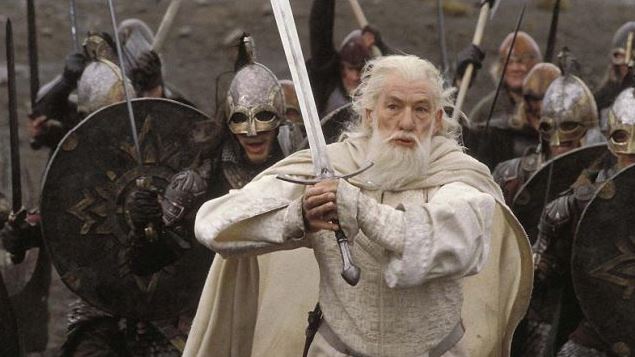
The goal is to open up more mechanical options to help enable the fiction. A James Bond-type Assassin Rogue may want to take the Thief’s Second Story Work over Infiltration Expertise, since that guy is always walking around saying his real name. Or a War Magic Wizard may feel that the Bladesong feature fits their idea of an aggressive, front-line Wizard more closely than the level 10 Durable Magic feature—even Gandalf, after all, does plenty of physical fighting with a sword.
Since PF2e already does something like this, I feel OK about it from a “balance” standpoint. A player already has to be putting levels into the class to access any of the subclass features, limiting the options for weird power builds (we get it, Gloomstalker Ranger / Assassin Rogue / Battle Master Fighter)—and frankly, players who chase those kind of builds probably won’t enjoy having me as a DM, anyway.
Most classes only get three or four subclass features, so this doesn’t add a ton of flexibility. But along with my own characters that might have used this, I’ve heard enough other players half-jokingly say they wish they could multiclass into the same class for other subclass features. If we can multiclass, why not multisubclass?
What do you think? Is this something you’d allow at your table, or am I missing something that makes this a truly horrible idea?
 James DM