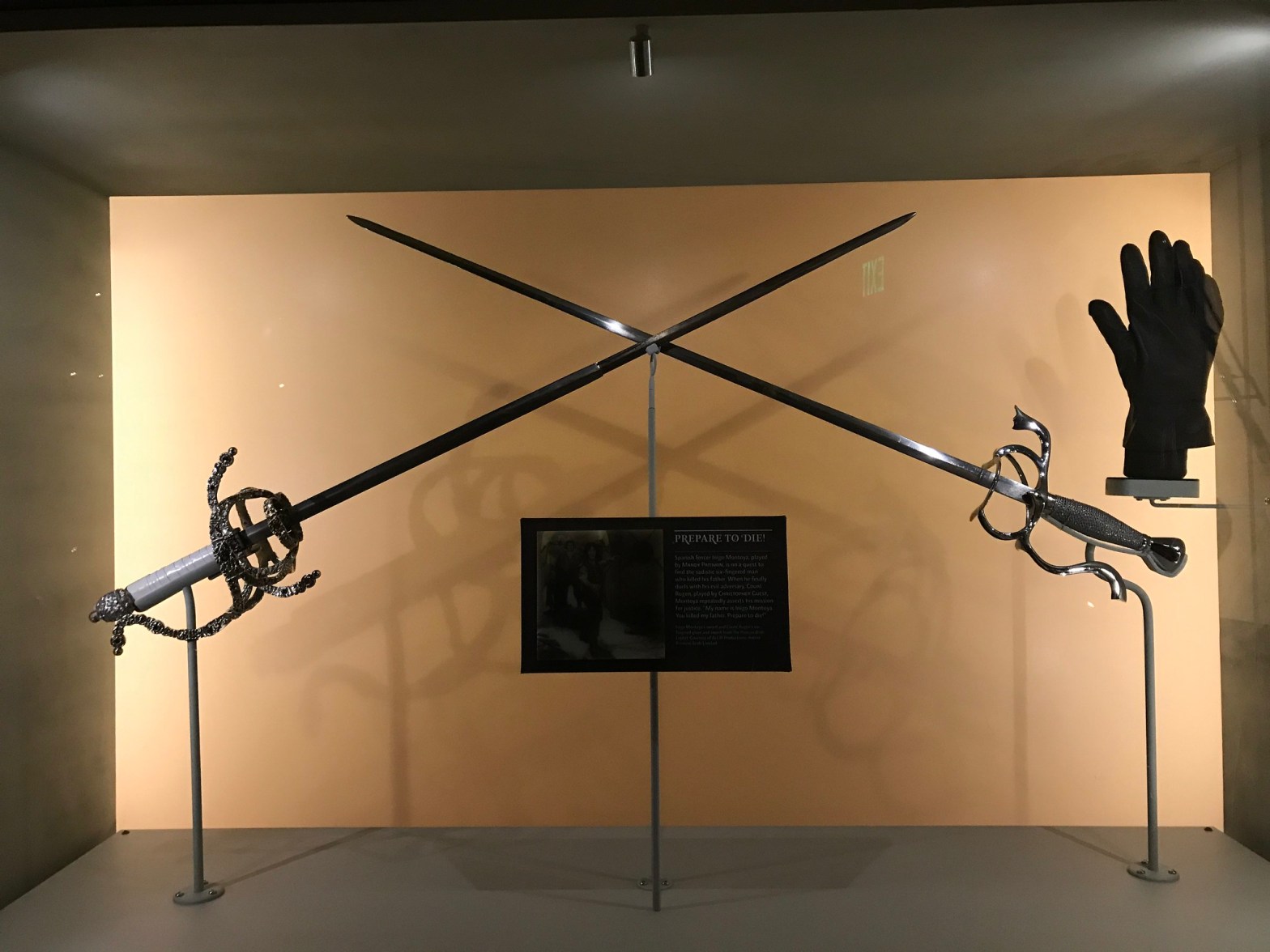
Image by Chris Devers on Flickr.
The Lionheart Blade is mostly an uncommon item with a bit of lore that amused me. I did put it into a game—and will again—but I don’t think the PCs or players ever actually found out the story of it. So here, internet strangers, one for you to enjoy.
Lionheart Blade
The pommel and crossguard of this magical rapier are delicately and ornately carved and set with jewels—which are revealed under close inspection to be rhinestones. While wielding this sword you get a +1 bonus to attack and damage rolls.
While holding this sword, you can use a bonus action to gain the effects of the heroism spell, targeting yourself only, for one minute (no concentration required). For the duration, you are immune to being frightened and you gain a number of temporary hit points at the start of each of your turns equal to your Charisma modifier (minimum of 1). Once this property has been used, it cannot be used again until the next dawn.
Proficiency with a rapier allows you to add your proficiency bonus to the attack roll for any attack you make with it.
On D&DBeyond
This magical rapier does require attunement.
The Lore
The Lionheart Blade belonged to famous Halfing stage performer Ham Hewett over a century ago. Ham used it throughout his career playing handsome heroes, swashbuckling scoundrels, and vile villains to packed houses.
Unbeknownst to the fans, and even most of Ham’s costars, he struggled with stage-fright for most of his career. Ham’s pre-show ritual included convincing himself to be brave, visualizing the stage and the limelight as a shield to bolster his self confidence. Over time, this repetition, the earnest adoration of his fans, and the inherent magic of the theater imbued the rapier with a spark of Ham’s bravery and derring-do.
Ham vanished at the height of his popularity. Some speculated that he crossed the sea to find new audiences and stories. Others that knew him better thought his anxieties had finally gotten the better of him, and he’d changed his name and stopped performing. Few knew the truth, which was far more mundane: Ham was felled by bandits (or a dragon, or whatever other end you feel appropriate) on some road your players are traveling.
After his death, the Lionheart Blade may have taken any of a few different paths. It may have been assumed to be a worthless prop, and discarded, or lumped in with his other mundane equipment. If it was recognized as magical, it may still be in use by its current owner. If it crossed the path of a dragon, it is likely that it ended up in a hoard, since it is priceless, glamorous, and useless to its draconic possessor.
The blade is found with an old, beat-up black leather scabbard with tarnished silvered inlays—it’s well-made, but definitely prioritized looks over longevity. The scabbard could be restored by a skilled artisan, but is not magical. The hilt has an elaborate basket handguard and pommel covered in gems. Think Inigo Montoya’s sword. The first indication that there is something special about this sword is that, despite being cheap costume gems and however old, none of them have dulled or fallen out.
The Above-Table Backstory
The second campaign I joined—and my main gaming group during the early Covid-19 pandemic—was mostly people who worked in theater, including folks who worked with exciting things like pyrotechnics and prop weapons. The theater stories were a consistent background theme to our games and other conversations.
I chose a rapier both for its Errol Flynn/Princess Bride dramatic flare and for the Finesse property. Charisma was the obvious choice for the spellcasting ability. The campaign where I introduced this had a Bard, a Paladin, and a high-Charisma Rogue, and I figured that, despite the heavily bardic flare, there would be some discussion about who should wield it. Sometimes I do create homebrew items with a specific character in mind, but I try to make them more generic and less-obviously-targeted when I can. The world, after all, is much larger than the adventurers, and doesn’t revolve around them.
The Bard had fewer HP and higher Charisma, so the temp HP might be more impactful, while the Paladin was far more likely to use a mêlée weapon. This was also one of the first few (non-cursed, heh) magical weapons I put into the world, so the Rogue would have gotten some utility out of it. Ultimately they gave it to the Bard more or less immediately, and I don’t think ever did much to find out its history. While they definitely stabbed some people with it, I don’t even remember if they ever used the heroism feature.
But then, I didn’t make this thing to be used, really. I made it because it seemed like a neat little story that I told myself—and now all of you.
 James DM
One thought on “Magic Item: Lionheart Blade”