Mechanics that Create the Fiction

Three related things recently:

First, Colville using guns as an example of his rule design process (an interesting topic for another time). He talks about how you want to create mechanics that encourage the fiction to happen.

For example—if you don’t want to watch the video right now—if you’re creating a sub/class around a Western-style gunslinger, two iconic actions are the quick-draw duel and fanning the hammer of your six-shooter. So, can you build in mechanics where, if you take those actions, you’ll feel like you’re in Unforgiven? And if, like many of the commenters on the video, you want to feel like a swashbuckler sailing the Spanish Main with a blunderbuss pistol, what mechanics could you design to make that work?

I also started watching some of Brennan Lee Mulligan’s Adventuring Academy videos, and obviously I had to check out this conversation with Dael Kingsmill which spends quite a lot of time on homebrew:

In it—spoilers—they start talking about how the mechanics of attacks and saving throws feel different. When you, as a spellcaster, cause a creature to make a saving throw, it’s a spell that simply happens. There’s no attack, there’s no missing. There may be a contest of wills and no guarantee that you’ll win, but you’ve already bent reality. An attack, on the other hand, is a practiced, refined action, a demonstration of martial prowess and skill.

Similarly, traps or hazards that require saving throws create a sense of danger that’s happening to you, things that are out of your hands.

Using Skill Challenges

Before I saw these videos—unfortunately, because this probably would have saved me some time—I was working on prepping a session and it was not going well.

The party has been making their way to a long-buried Dwarven delve, through a path that’s opened because of some geological instability. I had designed a pointcrawl version of a map. I wanted it to feel like a dangerous honeycomb of tunnels, a place with no clear paths, full of various hazards. I had notes about each node, and environmental details on the edges that would foreshadow where they were going.

I hated it.

I wasn’t convinced any of these were great encounters. Even as interconnected as the map was, it didn’t feel like Shelob’s lair, but I felt like if I approached a connected graph, it was going to make too many meaningless choices for the party. Or at least apparently meaningless, since I wasn’t sure how to communicate that they were on the right path until they stumbled onto the end. I wanted the characters to feel lost and frustrated, not the players.

This was leaving me uncertain about whether I wanted to include this part of the journey at all. If I couldn’t make it fun, why have it? They’d already gotten to do some cave exploration and combat. We could skip ahead. Was this worth a whole session?

The breakthrough was: what if it were a half-session skill challenge? Could I abstract away the tangle of intersecting caverns while not relying on them somehow guessing what the real paths? Could I influence the pacing a little more? Could I possibly encourage some more creative problem-solving than “I guess we go right”?

Inspired by the Mighty Nein’s journey to Isharnai’s hut, I took the encounters I had stashed in various corners of the graph—a mix of combat and hazards—and put them into a table. I figured out how I would introduce this, starting with a mediocre-DC Survival check. I figured out how many successes would get them there.

I had landed on a mechanic that I thought would better evoke the sense of the fiction I was going for. Not in those terms, but now that I have those terms, I think it’ll be easier to identify those moments.

And the results?

Of course, it didn’t go perfectly.

The party did come up with some interesting ideas—attempting to find and talk to any animals, using Boots of Speed to quickly investigate several paths, trying to roll a ball-bearing to detect the slope of the cavern.

Unfortunately, they rolled like shit. I think they got a single success against DCs that were in the 10–14 range.

They also spent a goodly long time investigating a mundane rock. They drank water infused with slightly psychedelic mushrooms (I thought I was writing that mechanic just to entertain myself, but I then got to ask “you’re drinking it? the water from the mushroom pool?”). They investigated an alternative path through an underwater tunnel, but rolled poorly on some of those checks as well and didn’t want to take the dive of faith. They used an herbalism book I forgot about—and some ridiculous Nature rolls—to avoid some brown mold.

They triggered a couple of combats that I rolled, which they absolutely destroyed. One of them ended with a floating skull trapped in a chest and now in their possession.

So my half-session plan ended up being the second half of the session. But they failed their way to the end and made it!

There were a number of things I could’ve done better. One thing I think I need to do is simply describe more. I think I worry about taking up airtime or not being an especially captivating storyteller, but it leads me to shortchanging the scene-setting, which probably makes the description I do spend time on even worse. There was one opportunity for an Animal Handling roll, which I wish I’d taken in retrospect, because how often do you get to use Animal Handling?

I want to create more opportunities for creative problem-solving, and ensure I’m rewarding it—or at least giving it legitimate opportunities to work. It’s fun, and with a mix of newer and veteran TTRPG players, practice is always helpful.

Mostly, it was an object lesson in thinking about whether and how mechanics—as much as narration, music, etc—are encouraging the mood/genre/fiction.
Battle Maps: Savior or Scourge

While I used the most inflammatory framing I could for the title, the answer is, of course: neither. They’re a tool and the trick is how and when to use them effectively?

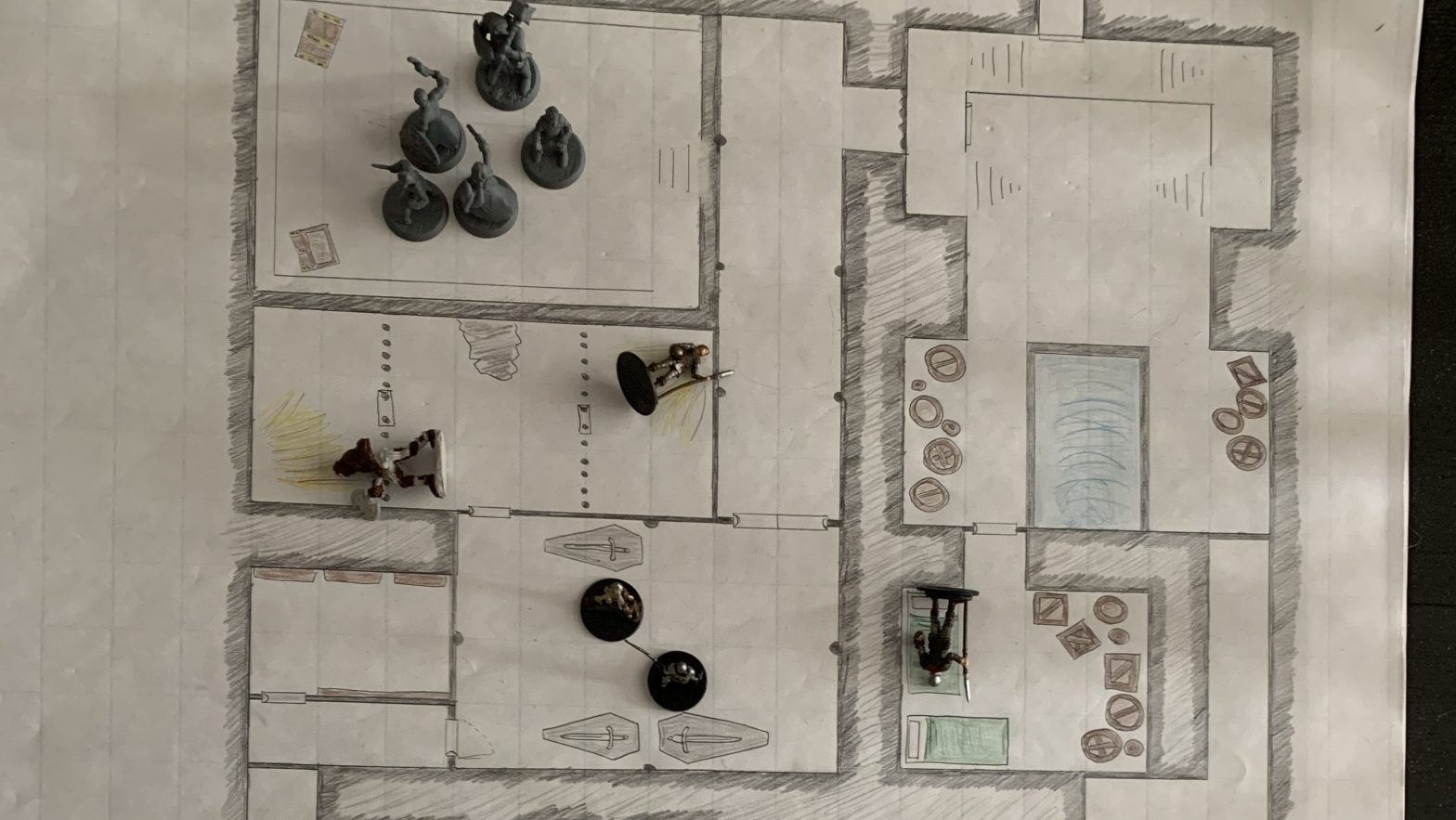
Spoilers for Critical Role, vague for most of it but I don’t want to figure out which episodes so say all of C1 and C2 up to E127, and the Lost Mine of Phandelver adventure. And minor spoilers for a campaign I’m running so if any of my players read this, it shouldn’t be too bad, but you will know I made some maps, for… some reason, who can say? Also you’ll get to see some self-critique.

Battle maps, and by extension “tactical” combat encounters, are a pretty divisive and evolving subject. In an interview with Sly Flourish, Crawford dropped that “None of the Wizards design team uses miniatures anymore. Chris Perkins got rid of his huge vat of miniatures…” preferring to use more abstract or Theater-of-the-Mind styles of combat. Actual play podcasts thrive and generally use TotM for their audio format. And yet there are thriving communities of battle map artists and patrons. Dwarven Forge has raised something like $20 million dollars on Kickstarter from supporters eager to have not just maps, but terrain (which, I mean, it’s so tempting).

I have been thinking about maps lately because the campaign I’m running has struggled with pacing and maps have—I think—been big contributors to that. We started with Phandelver, even though it’s diverged more and more, I used the published maps to start. Pre-pandemic, I’d actually copied some of them to 1-inch grid paper. More recently I just uploaded the images into Roll20 and tweaked the sizing until the grid pretty much fit.

I have criticisms of Phandelver to save for another post, but for a new 5e GM, it was definitely helpful for a time. But here I’m going to talk about the maps.

A lot of the maps in the adventure are designed around the idea of a series of small encounters. When you sneak through the Cragmaw or Redbrand Hideouts, or infiltrate Cragmaw Castle—which you can do without starting a fight if you try—or explore Thundertree, which is really an outdoor dungeon crawl. There are opportunities to take breaks, even short rests can be viable. And the first two more or less worked that way. We put out the map, we’d move through it, occasionally a quick fight would break out, and then it would finish.

But with the next two, something different happened: all the encounters ended up strung together into giant, lengthy (as in whole-session-and-then-some, one was 16 rounds—I’ve never seen someone need to recast Spiritual Weapon before) combats. The PCs split themselves up, ran into new rooms during the fight, made noise and didn’t stop enemies from shouting for help. Multiple sessions had to end at the top of a combat round, something I really try to avoid.

The maps had worked well as tools for exploration, but now that was devolving, and detracting from non-combat solutions.

There are a few other variables that are worth pointing out:

  • This party is relatively large at 6 PCs. I think this matters.
  • The first two maps—Cragmaw and Redbrand Hideouts—were in person, on paper.
  • The second two—Thundertree and Cragmaw Castle—were online on Roll20.

Over the holidays I ran a one-shot for fellow DMs Noam and James. We wanted to try out Tasha’s Sidekicks, so there were effectively 4 PCs, but two were simpler. I also challenged myself: don’t rely on maps. It was a nice way to practice theater of the mind, and the combats were fast—we got through three in a relatively quick session, with some puzzles and non-combat encounters thrown in, too. They were also simple, the enemies weren’t intelligent or tactical.

A recent session in which I’m a player involved an encounter—it didn’t start, or have to end, as a “combat” encounter—in a densely urban environment. Noam, the DM, had tried to create maps for it but struggled with scale. 5-foot grids covering a chunk of a city get large quickly. Instead we used a city-scale map more abstractly, not representing literal distances or even entirely literal buildings, just for a sense of relative locations. Noam had been worried about his perceived lack of prep going into this—ostensibly an “easy” moment to prep for since we’d left the previous session on a cliff-hanger and he knew exactly where we’d be and what was happening—but the players all said it had worked really well. It was a bad fight (my character is a retired Assassin Rogue, he does not like fair, face-to-face fights anyway). We ended up fleeing, which is rare enough by itself.

In a group chat of fellow DMs, we started digging into this. Did the lack of a map help? Did the presence of even the abstract map subtly nudge some players toward combat solutions? Did having the full city enable things like PCs running down and circling a block?

So, maps! Uh! What are they good for?

One thing maps, especially grid-scale battle maps, have is a strong association with tactical combat. If a map comes out, that communicates to players that the DM had at least planned for the possibility of a fight here, and seems to prime players to look for combat solutions. Sure, they can be tools to aid exploration, but if you’re not in initiative order, measuring time in rounds, the utility of a grid drops dramatically.

Maps also set the parameters of an encounter in a very real way.

In CR Campaign 1, there is a fight in the City of Brass. Matt built a beautiful piece of a city block out of terrain pieces. It was dense, there were all manner of buildings to break line-of-sight or provide cover, street details and detritus. And no one in the party (except maybe Liam/Vax?) considered leaving that area and going “down the block”. They didn’t even consider going to the far side of buildings that they couldn’t see well until Matt had an NPC fly there. What they saw was what there was, and it did appear to have a constraining effect on their imagination.

Conversely, in my campaign, the presence of doors to other rooms opened the encounter beyond what I’d expected. Because it was there, they could go there, and they did. Now I have more things to add to initiative order and 6 encounters become one mega-combat.

(I absolutely believe I have plenty to learn about setting the scene and tone as a DM, and that this is collaborative and I can’t guarantee a certain path or outcome, but I want to set myself up for success, too.)

The flip side of setting the parameters is that maps can enable more complex combat encounters. If the terrain itself is a meaningful part of the encounter, or if enemies or players are going to make use of the terrain and detailed positioning—think of the Oban fight in CR C2—the map can help ensure everyone is on the same page, and avoid “oh I thought… well then I wouldn’t do that.”

And of course, maps take work to create. A disproportionate amount of prep time can go into map creation, especially if you, like me and Noam, aren’t a fan of the more randomly generated style and like to think about the space as real and designed by in-universe actors. Tools like Dungeon Scrawl and Inkarnate can help a lot, especially for those of us who are more artistically challenged, but they can also become time sinks of tweaking.

And, at least sometimes, maps can be fun to make. There’s a reason I built a pretty detailed but useless overland map for a one-shot that was only going to see a tiny part of it.

One thing I’ve noticed on CR is that early on, Matt was more likely to use maps for exploration (like the Emberhold during the Kraghammer arc) but he’s been doing that less. I wonder if some of this is that, as he’s shifted into Dwarven Forge maps, it’s just not worth it. Matt is also incredible at description. He talked the party through navigating the ruins of Aeor, weaving both a clear and detailed sense of physical space with a strong sense of mood and aesthetic.

Matt hasn’t entirely stopped using maps for exploration. In C2E127, the party splits into 2.5 groups, with three characters navigating a basement complex, built out with terrain tiles. Several small combat encounters ensue, with a few different initiative rolls. Each encounter has a chance to end and drop out of initiative, moving back into exploration mode and less rigid time.

There are a few things that I think contributed to this working so well:

  • The party was small, there wasn’t much crowding, and they couldn’t rely on anyone else to handle any given situation.
  • Matt does a great job of scene-setting, going back several hours into the episode to set this up as an environment where a “quick-and-quiet” approach will probably be best.
  • Even when they were not initiative, and freer with time, the time-scales were still close to rounds.
  • It was a confined space.

So what’s the “so what” of all this?

I’m going to be thinking very deliberately about how and when I use battle maps.

When the encounter I’m trying to build is something I do expect or intend to result in combat, particularly if the terrain has features that can help or hinder either side, I’ll make maps. After all, tactical combat is a part of the game that I enjoy—but only one of many parts.

The maps I have been making have been simpler. Rather than building whole buildings or environments, I’ve been making a room here, a cavern there. I’ve also been trying to build up a library of pre-built generic maps—grasslands, a forest, a swamp, rocky terrain, etc. The digital equivalent of a grid over a themed background that I can throw some terrain elements like trees or walls onto quickly to make it unique. This covers encounters where, if combat breaks out, having the map can be fun or helpful, but it’s not something I want to spend a ton of prep time on or an especially unique location.

I probably will avoid using maps for exploration, at least not finely detailed, combat-scale maps. Description is a skill I want to improve, anyway, and running exploration without a map will make me practice. It also means exploration can be more expansive, more flexible—this might mean both me changing things on the fly for pacing, or shifting a modular part around, or leaving some blank space for the players’ imaginations—and not prime players that “this is a combat encounter”.

The “maps” I’ve been making for exploration have been graphs: nodes and connections. (Edges and vertices—I am a mathematician at heart.) Location A connects to location B via route 1. Each edge and vertex has some descriptive notes for myself, about the space and any encounters or other occupants. [Edit: there’s good material out there if you search for “pointcrawl“.]

I am going to try to teach myself to not bring out maps too early. Unless the PCs are trying to set up an ambush or have a similar need of terrain to accomplish something, I’ll try to wait until “roll initiative.”

And I’m going to try to purposefully use theater of the mind for combat more often, even for combat encounters that I’m preparing.

I like tactical combat, it’s a facet of the game I enjoy in the right doses. But 6 hours of it can get… draining—especially when it’s not planned, not phased, not climactic—and I also enjoy exploration, role-playing, and creative solutions to challenges. Maps are a tool, and like any tool can be used effectively or ineffectively. My goal is to be more deliberate and intentional about when the maps come out—and about what time goes into them.

Talking Behind the DM Screen

I haven’t gotten to play much in person this year, obviously, and so my physical DM screen has gone largely unused.

Which is too bad, because it’s actually super helpful. I have one of the normal WotC ones, and for the most part I find the info they’ve picked useful. I use the price tables most often, since those are things that come up just rarely enough (and 5e prices are a little unintuitive) that I forget them more than things I do often like setting DCs.

There are only four things I’ve added:

  • In big letters, “Concentration Checks!”—which may be the hardest thing to actually remember in the moment of combat.
  • Also in big letters, “Spotlight!”—a gentle nudge to keep it rotating when we’re out of combat.
  • PC’s passive perceptions scores.
  • The social DC table.

I still have a lot to learn about running social encounters, especially building habits around knowing what NPCs want, how they feel about the party, and how to actually enact those things as responses. I haven’t been particularly happy with the few truly social encounters I have “designed.” So to help, I took some of the tables in the DMG and turned them into this:

Social DCsFriendlyNeutralHostile
Significant risk20
Minor risk1020
Help, no risk01020
No help or harm010
Active opposition0
Transposed Social DC table from the DMG, p. 245

This fits on a post-it note and fits nicely over some of the “size” examples that I never use. And it helps me to think about how I might structure a conversation or what might be worth rolling for. DC 0 is the NPC’s default reaction. Trying to convince a hostile NPC to help you is hard—getting them to risk something for you is impossible.

Of course these are just guidelines. For a given NPC, the approach the PCs take matters. Intimidating a Friendly NPC might have a higher DC or not have the long-term result the PC wants. What arguments they make—even if the player is describing it—will affect the DC one way or another. And it’s not just risk to life and limb, but “risk” to things they care about, or sacrifices they might make.

Some NPCs can’t be reasoned with, or won’t agree to certain requests no matter what. The neutral shop or inn keeper isn’t going to give things away for free. The zealous cult leader isn’t going to deviate from their plans. The patsy that is more scared of their boss than the party isn’t listening.

What else do you keep behind the screen?

House rules I’d like to try

Previously I wrote about some of the house rules I’ve implemented. Here’s a handful of things I would like to try! All of this is, of course, stolen, so I’ve tried to provide some kind of credit where I could. Sometimes it’s a citation of credit.

Alternative initiative systems

So, I don’t feel like initiative is a particularly big problem—or even the right problem—that needs solving, honestly, but I am very curious to see how some other options might influence the feel of combat.

One version people mention fairly often is AngryGM’s Popcorn Initiative. What I (theoretically) like about this version is that it gives players a really concrete motivation to be engaged with what’s happening right now. Ideally, players have some idea of what they want to do and they might update that as they see what happens. In reality, it can be tough to keep that up when your plan gets junked 3 times between turns. Why not skip straight to the “oh oh I have something I can do right now“?

Another system that I’m very interested to try is “Fast/Slow” initiative, which I learned about from Tab Atkins. I like that there are very deliberate trade-offs, benefits to both going fast and slow. And reasons you might change round-to-round. I do wonder if it stacks the deck even further onto the PC side. Making challenging encounters is already, uh, challenging.

I’m interested in things that can potentially change each round because otherwise “high” initiative really doesn’t matter after the first round. I’m not especially interested in things that require telegraphing your move (like a version Colville described where lowest wins and quicker actions use smaller die) or are “crunchy.” Stopping to collect initiative is enough of an interruption as-is, I’d rather not have to do math again each time.

There are some things to shake out about things that give people advantage on, or bonuses to initiative rolls—but since high initiative really only matters for Assassin Rogues and even then only the one time, it feels solvable.

A smaller variation: alternate skill checks

In 5e, Initiative is always a Dexterity check. There are some bonuses, like Barbarian’s Feral Instinct, Bard’s Jack of all Trades, or Gloom Stalker Ranger’s Dread Ambusher. But Dexterity—the implication being it’s all down to physical reaction time—doesn’t always make the most sense. What about when a fight breaks out mid-conversation? What about the party member who snuck around back to take advantage of the distraction?

Some folks have mentioned conditionally using Wisdom (I think I saw that on a comment on one of Dael’s videos but I can’t find it now). Maybe it’s up to the player, but not available if you’re surprised. Barbarians still get advantage, Bard’s still get half proficiency, Gloom Stalker still… adds both, I guess?

Pathfinder 2e makes Initiative a skill check. The default is Perception, but if you’re sneaking, you might use Stealth. If you’re conversing, maybe Insight—or Deception. If you’re sprinting into the room, maybe Athletics.

I like that because I think it feels more verisimilitudinous (that is apparently the real word, I don’t know what to tell you). And it’s not too crunchy. It would probably be a huge boon to Assassin Rogues. Most other benefits would translate, I think. Not sure what to do about Gloom Stalker but we could figure it out if it mattered. But it still suffers from the problem that, after round 1, it doesn’t matter anymore.

Language skill progression

This one is straight-up making something PCs can normally do harder, so I don’t know if I’d find a table that was into it, but in 5e, you either know a language fluently, or you don’t at all, and that seems silly.

I like most of Dael’s system for language skills. Your skill is 0–100, where 100 is fluent, and anything less than that represents some chance of failure to read, understand, or communicate something. Roll a d100, roll equal or under your skill, and you got it. I think her system for starting language skills works well, but I’d want more opportunity to improve during downtime, or even on the road via practice. (In general I think the DMG rules for learning new skills/tools/etc are too onerous, but probably derive from having two levels: completely inept or complete mastery.)

My only hesitation is that it risks getting a little more crunchy, but how often do you get to use d100s, really? I suspect the trick would be not calling for rolls too often.

Rumors

Players have to write down rumors, some true and some false, that the other PCs would have heard about their character. I don’t remember the first place I heard this, but I think it might trace back to Wil Wheaton?

There are a few variations of this, in terms of how many you write and how you distribute them, but the key part in all variations is that some fraction, like 1/4 or 1/3, are false. No one but you and the DM knows which ones are real, which creates an aura of plausible uncertainty around each one.

This isn’t so much a house rule, but I also very much like the idea of PCs coming in with existing relationships. Maybe not everyone knowing each other, like Monster of the Week’s “History” mechanic, but some shared backstory. Maybe some part of this gets played out in a few session 0.5s with each group—Noam did this in a recent campaign and it’s worked out wonderfully. I’d like to think about how to combine that with some idea of rumors.

Partial success, or success at a cost

Technically, the DMG mentions “success at a cost” and “degrees of failure” in Chapter 8, under “Resolution and Consequences”:

When a character fails a roll by only 1 or 2, you can allow the character to succeed at the cost of a complication or hindrance.

DMG, p. 242

So is this a house rule or an optional rule or just RAW? 🤷🏻‍♂️

Rev, the keeper of The Critshow (which I sadly haven’t listened to in a while since my podcast activity waned again) had one of my favorite approaches to this. He—if I remember this answer correctly—interpreted the description of a partial success on the Act Under Pressure move a little uniquely. It says:

On a 7-9 the Keeper is going to give you a worse outcome, hard choice, or price to pay.

Monster of the Week

He interpreted this as: the Keeper gives you each of these and you choose. It’s like if you trip, you have a split second to try to decide if you’ll try to protect the thing your carrying or sacrifice it and protect yourself. He reasoned that the Hunter would have that same split second.

Coming up with the options feels like a lot of work, though I suspect it’s not once you’re in the habit—and Rev said as much, as well. But it might be simpler: if you fail a Fireball’s Dex Save DC by 1, maybe you can succeed by dropping prone. Or if you just miss the Acrobatics check to jump over the fence, you can succeed but you’ll snag some piece of gear and lose it on the other side.

My biggest hold-up here is that I worry there are a number of situations that don’t have obvious trade-offs to make. If you fail the Cha Save against Banishment by one, could you succeed but it mentally exhausts you and you’re stunned or incapacitated for a turn, or maybe you now have disadvantage on your next saving throw? Against something like Banishment or Feeblemind, what’s a trade-off that a PC would even consider possibly not worth it? Maybe it’s OK to say this only makes sense in certain situations—but there’s that habit thing again.

Some other things

  • Running – This is a thing I’ve talked with Noam about but I think would take playtesting. Is there a satisfying way to bring the 3.5e “Run” “full round action” into 5e? Like you can full on sprint (regular movement speed is a pretty lazy walking pace) to move a total of 4x your movement but it takes action, bonus action, and maybe reaction. Maybe it grants advantage to attacks of opportunity. Would you need to tweak Rogues/Monks/Expeditious Retreat at all?
  • Simpler weight/bulk – In a world of good digital character sheets, this is less important, but if I had to track this by hand again, maybe something like PF2e’s 1/0.1/0.01 system would be better. Or maybe it’s just a thing I’ll more or less ignore forever until it gets ridiculous. (“That dragon’s hoard is probably 3000lbs of coins, you can’t carry that.”)
  • Scaling abilities with proficiency bonus – Tasha’s started introducing a number of mechanics where you can use them a number of times per day equal to your proficiency bonus, instead of equal to a particular modifier (often Wisdom). This removes one of the downsides to multiclassing: you are still probably losing out on one or more ASIs, but it doesn’t have the compounding effect of limiting abilities you already have. I’d strongly consider replacing the modifier with PB for things like Bardic Inspiration, a bunch of Cleric Domain abilities, etc.

What are your fave house rules or things you’d really like to try? (I ask the 3 people who read this blog.)

What “Alignment” means to me

xkcd: alignment chart of alignment charts
xkcd’s alignment chart alignment chart

Character “alignment” is an strange concept with an interesting history. But I want to skip the history this time and just talk about how I think about it my table. Specifically I want to talk about PC alignment. For NPCs, I don’t tend to think about it very much—except for celestials and fiends.

I didn’t include this in my post about house rules because in 5e alignment barely matters, mechanically—and that post was getting long and this slipped my mind. Spells like Detect Evil and Good and Protection from Evil and Good no longer mention alignment. Instead they mention celestials, fiends, undead, etc—and fey who arguably have their own concepts of good and evil. There are a handful of legendary regional effects, like the Unicorn’s, or optional rules like being in a positive or negative plane, where alignment matters. While 4e said things like “[a paladin] must choose an alignment identical to the alignment of [their] patron deity”, 5e says things like “[Oath of Vengeance] paladins are often neutral or lawful” (emphasis mine). There are a couple of items, like the Sword of Answering or Candle of Invocation. In short: it doesn’t come up very often.

To support roleplaying, 5e offers Personality Traits, Ideals, Bonds, and Flaws (4e suggested Mannerisms which are also useful to think about). These have no mechanical implications, they’re just suggestions to help you make a more three-dimensional character. In that sense, alignment can also be a helpful tool for the player to help flesh out a character and think about how the character might react to a given situation.

Real people contain multitudes and inconsistencies. I don’t think it’s interesting to force a player to be beholden to a given alignment or trait or ideal. I might ask “How do you think your Paladin would feel about evading the guard like that?” but saying you were Lawful Good in session 0 doesn’t predetermine the answer.

However, I also don’t think you get to declare an alignment, ignore it, and still claim it. There are, after all, a few places where your alignment matters, mechanically.

(There’s another question about Paladin’s and their Oath tenets, and Clerics and their gods, but neither of those are mechanically alignment.)

So the way I think about alignment is: alignment is a reflection and result of your behavior, not a card-carrying membership. If you said you were Chaotic Good, but you’ve consistently restrained from doing what you thought was right because of social structures or the law, you might find yourself somewhat more Lawful. Or if you’ve consistently made more selfish choices, you might find yourself slipping into Chaotic Neutral or eventually Neutral Evil. Or if you were Neutral but keep consistently helping people for altruistic reasons, you might be Neutral Good, pal.

I don’t want this to be a surprise to players. I don’t want them discover the consequences of their choices only when they encounter a unicorn—especially because, without a wild magic sorcerer, that doesn’t happen a lot.

I’d let players know about the direction and changes to their alignment. Maybe they think it’s fine. It could be a part of their character’s arc, or maybe they are finding that how they enjoy playing the character doesn’t match their original vision. Or maybe it’s a sign that the character is going down a path they didn’t expect.

Narrative Causality and Heroism

A friend asked a question the other day that I’ve been thinking about: why is it that my character rises up as a hero and not, say, the blacksmith whose smithy was burned down by a dragon?

There’s a lot to unpack here, and I think it’s really interesting, but I don’t want to keep blowing up discord. So: blog post!

Spoiler warnings for this one: probably minor but Lost Mine of Phandelver, The Hobbit, Critical Role campaign 1, the Critshow.

The short answer is: maybe the blacksmith will! There are at least three angles here: the historical design and context of D&D specifically; the in-universe question, within the world of the fiction; and the meta narrative concept of the fiction.

I quite enjoyed Matt Colville’s series of videos on the History of D&D. In the first entry, on OD&D/1e, he digs into some of the language Gary Gygax used, and his influences. Notably, Gygax anchored the game in pulp fantasy, sword & sorcery like Conan, and pointedly left out Lord of the Rings, which is more epic fantasy and was wildly popular at the time.

Gygax (paraphrasing Colville here) also thought the rules should generate the world. Early D&D has some baked in assumption that all games take place in the same reality, and that the collective actions of the players should lead to a collective fiction that was the setting. Elves and Dwarves were rare in the fiction, so the game rules were designed to ensure that they would be rare among the player characters.

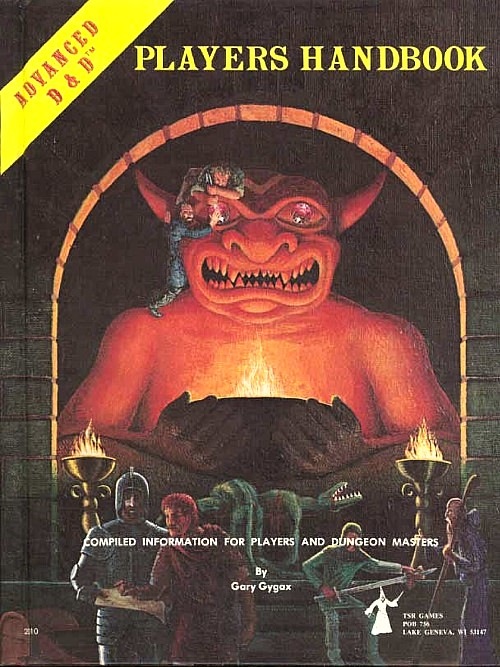
This must also mean that adventurers were fairly common, in the fiction. Sword & sorcery “heroes” aren’t always out to save the world—they’re usually out to steal something. The AD&D Player’s Handbook cover by Dave Trampier perfectly captures what you do in D&D: delve dungeons, read maps, kill monsters, and take their stuff.

https://forgottenrealms.fandom.com/wiki/Players_Handbook_1st_edition?file=Players+Handbook+1st+edition.jpg

So in settings like Greyhawk and the Forgotten Realms, at least, “adventurer” is an in-universe job. Some people are adventurers. It’s a lucrative, but very dangerous profession. Some people, like Daran Edermath, do it for a while and then retire to a small town to live out their days in peace. Some, like Gygax’s own PC Mordenkainen or any sufficiently high-level OD&D “Fighting Man” reach a point of history-bending influence where adventuring isn’t the best way to make money anymore. Others… Well look, all the skeletons, chewed bones, and slowly dissolving equipment in a gelatinous cube have to have come from someone, right?

Modern editions have moved away from the idea that the rules should en masse result in a collective world that reflects the fiction. Instead, in 5e, at level 1, you’re already, mechanically, special. Mechanically, most people in the world are Commoners. Not too far from the “human” average of 10 in each stat. But you are going to be an adventurer—in addition to whatever backstory reasons you might have—because you can. Because you have found yourself a few standard deviations away from the norm, and that gives you the option. To borrow from Saterade: not every 6’7″ person plays basketball professionally, but you’ll be hard pressed to find a lot of people my height in the NBA.

It isn’t that your party isn’t the only adventuring group out there—unless you’re in a homebrew setting where they are, of course. Or the only powerful people in the world. It’s hard to imagine a D&D setting without some seemingly aloof high-level magic users, or red-haired former-adventurer tavern owners. If you’re in the Forgotten Realms, the Silverhand sisters, Drizzt, Elminster, Jarlaxle, and so many others have been adventuring since before you were born.

(The concept of “power” that exists in-universe in D&D, and other settings like Dragon Ball, is fascinating and worthy of its own rambly post.)

Our smith might have a 13 or 14 Strength score, and maybe even proficiency with a longsword—it’s a dangerous world after all. But that doesn’t mean they are, or perceive themselves to be, cut out for professional adventuring.

So what are the options our smith has when their business is burned by dragon’s breath? Fighting dragons is risky, even for established, professional adventurers: our smith might not even consider them fightable by normal people. It’d be like trying to get revenge on a hurricane—a dragon is basically a force of nature to them. Or maybe the risk outweighs any possible benefit—they’re likely to die on this quest, and for what? Especially if they have surviving family.

Or maybe, they do go. There are lots of adventurers, after all, maybe this dragon attack was their tragic backstory. Revenge or treasure, and their self-confidence, is enough to push them towards the danger.

Sure, they might die, but they might win! Maybe while your party, the local adventurers who just saved the town, went off and dealt with the necromancer, the smith got a group or posse together and they took the fight to the dragon. And you missed it.

One of the great and unique things about tabletop RPGs is that the world is not only persistent, but it moves along off-screen. If you follow plot hook A, you won’t be there to stop plot hook B. As Noam pointed out, it’s always worth understanding what would might happen if the PCs don’t show up. The Countdown from Monster of the Week pushes you to think what will happen off-screen. The Alexandrian calls it having goal-oriented opponents. There’s not only a sense of urgency but also of exigency—credit again to Colville for making me think about this, it’s worth its own post, too.

But even if the NPC blacksmith goes and fights the dragon and wins, we’re not going to put it on screen. Because we’re not telling the story of the blacksmith—that’s a book, not an RPG.

D&D is rooted in sword & sorcery, but I think most modern players, at least most newer players, at least most players I know, have at least one foot in epic or heroic fantasy. Aragorn and Frodo are more common archetypes than Conan or Elric. Or even Bilbo—the original halfling Thief who just wanted an adventure. And the design trend of TTRPGs since the 90s is toward this type of narrative-driven “storytelling”, while other games like Gloomhaven have filled the pure “delve dungeons, kill monsters” niche.

5e also grounds progression in heroism. Levels 1–4 are Local Heroes, where “the fate of a village” might hang on your campaign. (Many 1e adventures like Against the Cult of the Reptile God start in the same place.) But if you play a campaign long enough, you get to levels 17–20: Masters of the World. You don’t have to save the world, but if you are still looking for a gameplay challenge or satisfying narrative, you may well do so.

So why, of all of these adventurers out there, is your group the one to stand up to the BBEG? Because this is your story.

Ultimately, the “camera” is going to focus on the PCs. Anything that happens off-screen—whether the blacksmith stays home, kills the dragon, or dies trying—is background detail in the world because this world only exists to tell the story of the PCs. If you put a PC into the Total Perspective Vortex, they’d come out happily munching on a piece of cake.

If we were telling the story of “how the blacksmith slew the dragon,” one of the PCs would be the blacksmith. If we wanted to tell the story of Allura and Kima imprisoning Thordak, the PCs wouldn’t be Keyleth and Pike. Gandalf must mark Bilbo’s door, because whoever’s door he marks is Bilbo. If he’d shown up at Rosamund Took’s, then Rosamund would be Bilbo as we know him.

In other media, using the perspective of audience proxy characters—C3PO and R2 in Star Wars, their progenitors Tahei and Matashichi in The Hidden Fortress, to some extent Nick Carraway in Gatsby—can be an effective way to frame a story. But in a TTRPG, the PCs are the main characters, whatever the PCs do. That isn’t to say other, bigger activity doesn’t happen. In a war setting, the PCs probably aren’t the most influential characters—but the war is the backdrop of their story.

Sometimes an aside to look at someone else can be great. The Zeppo is one of my favorite Buffy episodes. There’s an arc on the Critshow where the main hunters are all captured, so the players step into the roles of the previous generation, called out of retirement to help. Mechanically, it can also be a good way to change things up, take a bit of a breather.

But if I put Chekhov’s Mage into a low-level campaign, I’m not going to say “oh yeah, Alustriel and Elminster handled that.” It’s one thing for the town blacksmith, bard, and bowman to fight the local dragon, but if there’s a big, narrative threat, and the PCs don’t deal with it, then the BBEG pretty much gets to succeed at whatever they’re doing. And if there’s a TPK and we roll up new characters, then the last group—and possibly that BBEG’s success—becomes part of the background of the new one.

DCs between PCs

One more house rule that I have adopted and so far like—and one more where credit to Noam is necessary—covers interactions between PCs. Specifically those social interactions where there’s no evident opposed check.

To provide some context, one of my goals is to enable players to play high-Charisma characters even if they aren’t such great improvisers or actors to be able to roleplay it. I keep reminding myself to be as open to players who want to describe what they do in social situations as to those who act it out. After all, I’m not asking anyone to actually pick the lock or fire the arrow, so why ask them to really hold a crowd’s rapt attention?

(One thing I’m not a huge fan of is rolling the social check first then playing the scene based on it. Part of the reason is that I don’t necessarily know how to act more persuasive just because I rolled high. Another part is that I also wouldn’t call for an Strength roll before deciding how you push the rock out of the way: the way you approach the problem could influence the DC, grant advantage or disadvantage, or even eliminate the roll entirely. So you could say “I want to try to distract the guard, mislead them somehow.” But you could also say “I want to tell them there’s a fight around the corner” as the Wizard prestidigitates the sounds of fighting—or you could say in character: “Oh thank Kord, there’s a fight! Come quick!” Either way it’s a Deception roll, but the circumstances change.)

When PCs are interacting with NPCs, I have all sorts of tools to resolve those interactions. But sometimes PCs interact with each other (gasp!).

For physical situations there’s usually some way to resolve those intra-PC interactions. If one is trying to grab another, that’s a straightforward Grapple. If someone wants to punch a fellow party member, roll an Attack. Trying to sneak away or palm something? Stealth or Sleight of Hand versus Perception.

Social situations are tougher—and this makes sense, since roleplay is a distinct pillar of the game. There are some directly opposed skills: if one PC is lying to another, there are specific skills to cover that. Liar, make a Deception check; liee(?) make an Insight check. Done and dusted. But there are a number where no opposition makes sense. How do I Intimidate someone else, or Persuade them? Should it be against their Wisdom (which older editions connected to “Will”)? Or their Charisma, which represents, per the PHB, “force of personality”?

In an interaction with an NPC, I would set a DC for Intimidation or Persuasion, based on a number of things. I wouldn’t roll like I would for Deception vs Insight. Why not apply the same thing to PCs?

So if a PC is trying to talk another PC into something, I’ll let the person being persuaded set the DC for a role. Usually that person decides that this is how it should be resolved. “Convince me.” The persuader might also make the offer: “I want to try to convince Panlan.” I might bring it up if there seems to be an impasse but wouldn’t force it.

There are two restrictions.

First, unless there are exceptional circumstances, the DC has to be between 10 and 20. (If the player isn’t accustomed to setting DCs, I’ll ask them “easy, medium, or hard” and use that to suggest 10, 15, or 20, respectively. For players who also DM and are more familiar with it, I’m OK with them setting it at 12 or 18 or whatever in that range.) Higher than 20 and it stretches belief that there is anything that could convince you.

Second, you have to state the DC before the roll—or that there’s no way. I like to think players would give each other the benefit of the doubt there, but I want to avoid any doubt or suspicion.

For this to work, a couple of things have to be true. The player setting the DC has to be setting it reasonably and in good faith—and be willing to respect the result. Players have to be bought into this as a resolution method. Finally, I insist that the person taking the active role is making the roll.

(I was going to use an example of the active person rolling like: I wouldn’t use passive Deception vs active Insight for a lie. But I wouldn’t use this system for intra-PC Deception/Insight anyway. I could imagine using passive Insight, I suppose.)

Of course this isn’t for every table. If all the players are happier roleplaying out the conversation, great! But not everyone is, and as a DM and as someone who is not a good actor and who plays a character who is far more charming than I am, I think it’s important to enable playing characters who are better actors than we are, just like the better athletes or pickpockets or history experts. This is one tool in that toolbox.

System Mastery and System Completeness

One subset of the folks I play with regularly is excited about trying new things, and this started when we decided to try Pathfinder 2nd edition. I never played D&D 3.5e, or PF1e, so it was new to me—it’s also a different fork of history, since Pathfinder branched from D&D after 3.5e. Now it’s evolved on its own, been refined on its own.

There are a lot of interesting things from PF2e that I think are potentially worth stealing. The XP system is, I think, a distinct improvement if you want to use XP. Thinking about class and subclass features as a bit more of a grab bag is a great way to allow a little more customization. Breaking out background biology and culture is a good step—though ultimately I prefer the even more open version in Tasha’s.

Ultimately—and this is absolutely a personal preference—I was somewhat underwhelmed. One thing that I was nervous about going in, and that I did find to be true, was that it’s breadth might actually be limiting. If there are rules for everything, where do you find the blank spaces around them to make it your own?

5e simplifies a number of things with Bounded Accuracy that let you as the DM lean into the blank spaces. Setting DCs is easier when there’s a global scale of difficulty. Granting Advantage and Disadvantage is easier than calculating circumstance bonuses. There are a lot of moving parts, but still far fewer than 3.5e and its Pathfinder progeny.

In one of Colville’s videos, he describes making up abilities for notable enemies on the fly, picking saves and DCs on the spot. I believe it’s this one (spoilers for his Chain of Archaron and for Critical Role campaign 1):

Is this improvisation good? I don’t know. But I do think that 5e allows a certainly level of system mastery that I don’t think PF2e permits, and that enables this kind of spur of the moment building. You still can’t, and don’t need to, hold every detail of every rule in your head, but you can hold the underlying system and assumptions.

My Version of 5e

My friend Saterade said something interesting the other day: that every DM running 5e really needs to take the game as a template and turn it into their own system. Just like every Forgotten Realms or Eberron out there is its own distinct version of a universe, our house or table rules, our homebrews, the way we approach rulings and when we use rolls, the elements we include in our worlds and the stories we tell all make each table’s version of 5e into a distinct dialect of the game.

So in the spirit of other DMs, here’s some stuff I stole (those Dael Kingsmill videos and their comments are great sources of ideas). Generally, I err on the side of PCs are cool badasses and I want the mechanics to reflect that. I also like taking stuff from other game systems sometimes. Good ideas are good ideas!

Some house rules I use

These are rules that I’ve used in campaigns where I’m either DM or player, and I would incorporate into a new campaign.

Tasha’s class options and origin customization rules

Yes, please. Make an half-orc who was raised by her human family and speaks no Orcish. Make an elf fighter who was always a little stronger than delicate. For one thing, as an adventurer, you’re already special at level 1, so why be typical?

For another, let’s start getting rid of that racial essentialism that’s been baked into RPGs for forever. There have been a lot of interesting approaches to this from the community, like Gabe JamesClass Modifier Module, or Arcanist Press‘s Ancestry & Culture—which is more like Pathfinder 2e’s route. In Tasha’s, WOTC went with the most open version and just said put that +1 and +2 wherever you want, but I’d absolutely recommend either of those other modules as alternatives or inspiration.

(As an aside, I don’t think optimized and RP-able are mutually exclusive. D&D is a game where numbers very much are story, so if you’re supposed to be good at being sneaky or lying to people, your abilities and proficiencies should probably reflect that. Building for the biggest damage rolls isn’t where the fun is for me, but I get it—I very much want to cast Meteor Swarm just once.)

I’m a fan of the class options, too. The reined in some of the spellcasting versatility features from the Unearthed Arcana and selfishly I like how it landed. (Yeah Wizard cantrips! It makes sense that Wizards keep so much flexibility, but I’d consider extending that to Clerics and Druids, given the source of their spells and how they manage them.)

Keep things moving

Drinking a potion is a bonus action. Let people do things.

The 5-foot step I have previously written about.

I allow Flanking when two allies are a knight’s move apart. Why not? I figure it sufficiently splits the attention of the target.

Of course, monsters and NPCs get all of these, too.

Unearthed Arcana and homebrew are great

I homebrew monster stat blocks pretty much constantly (and usually on purpose! I totally meant for those hobgoblins to have hide armor instead of chain mail, that’s why their AC was 16! I definitely didn’t read the wrong stat block 😬) so why not PCs?

I have one PC who traded a Rogue skill for proficiency in Intelligence (Trade) checks, because it makes sense for him to have some familiarity with the buying and the selling of things. Another is a Twilight Domain Cleric, and neither of us thought Vigilant Blessing was super thematic, so we replaced it. For the Drunken Master Monk, I’ve offered that we can change some stuff around and bring back a version of the 3.5e prestige class’s Noxious Breath because it’s cool—he’ll probably gain this instead of Tipsy Sway or Drunkard’s Luck. The Bard… look there’s a lot going on there but it’s backstory and the players know about this blog.

One easy source for this, and I stole this idea from my friend Noam, is opening up other subclass features: at any level where you get a subclass feature, you can take a feature from a different subclass that’s available at the same or lower level. For example when your Assassin Rogue hits level 9, maybe they’re more of a Bond-style Assassin, and the Thief’s Second Story Work fits that better than Infiltration Expertise. You’d probably want to put some restrictions, maybe around flavor, or maybe limiting the number of different subclasses you can pull from. But it’s a nice way to offer some more customization, kind of like PF2e’s Class Feats.

Another straightforward source is reskinning spells. Fireball can be Ball Lightning or Shatteraga with the stroke of a pencil. Swapping damage types within a tier (elemental: acid, cold, fire, lightning, poison, thunder; mental: necrotic, psychic, radiant; force is probably most equivalent to magical bludgeoning/piercing/slashing) is a no-brainer. (Changing the damage type on the fly is a whole other can of worms.)

And I just enjoy making my own magic items. I am still proud of the Lionheart Blade, a +1 Rapier, pommel studded with… is that costume jewelry? It lets you cast Heroism on yourself once per day using Charisma. (I expected this to lead to more of a discussion but they just gave it to the Bard, which feels thematic.)

Make Intelligence matter

In most settings, when you dump Strength, you do so knowing that a bunch of aspects of adventuring—running, jumping, climbing trees—will be harder. (This is why my scrawny Wizard learned to Fly.) But Intelligence checks are typically less common, and it’s awfully easy to make it a dump stat. Sometimes, if you’re willing to lean into the RP, that can be hilarious. But often it just kind of doesn’t matter.

So another rule I was introduced to by Noam, and another one that’s very similar to PF2e: bonus proficiencies based on your INT modifier. The quick version is:

INT modifierBonus
+1Proficiency in one Language or Tool
+2Proficiency in one Language, Tool, or Skill
+3Proficiency in one Language, Tool, or Skill, or Expertise in a Tool or Skill
+4Proficiency in one Language or Tool

These are cumulative, so if you have +3 INT, you can pick up Elvish, Cartographer’s Tools, and Expertise in Deception—as long as it’s something where you’re already proficient, just like Rogue or Bard Expertise.

(I really wish I knew who the author of this was, but the GDoc doesn’t say. So if you know, please share so I can credit them!)

Rolling good stats

I enjoy rolling stats but don’t love the middling and mediocre results of 4d6-drop-lowest. After discussing a bunch of strategies (including 1d20—let chaos reign!) I ended up making a roll simulator and playing with options. (AnyDice is a fantastic tool but I couldn’t make it do weirder things, like “4d6+1d4, drop the lowest 2”.)

I’ve done “4d6-drop-1, but the total must be at least 70, or you can throw out all 6 and roll again”, which I think is what Matt Mercer does. It works fine, but it takes a while, since around 1/3rd of all sets of 6 will be less than 70.

Lately I’ve been leaning toward 4d6-reroll-1s-once-drop-lowest. Sure it’s still possible to roll a 4, but not especially likely. I think of this as basically a faster way to get to >=70, though I wouldn’t keep the >=70, too. It does move the average up by 1 and the standard deviation down by 0.4, though, and I really do love at least one good low stat.

Rolling hit dice

My favorite version of this is just reroll 1s. It moves the average up a tiny bit—by about 0.5—but getting a 1 is just so frustrating.

One thing I’ve done and don’t recommend is “you can used fixed or roll.” Pick one for the table.

One that my friend Paul has done is that you can’t roll under half, e.g. if you roll a 3 on a d8, you use 4; if you roll a 1 on a d6, you use 3. My only quibble with this is that the bigger your hit die, the more you benefit from it: for a d6, the average goes up 0.5; for a d8, by 0.75; for a d10, by 1; and for a d12, by 1.25. But it’s a nice way to ensure everyone gets some new HPs every level.

Upcasting spells that counteract each other

I’m going to write about rules I’d like to try in another post, since this one got so long. But I’m going to cheat, because it’s my blog and because this one hasn’t come up on stage in a campaign, but it’s in my head. I haven’t run it by the players yet, so feedback pending.

I appreciate the mage vs mage aspects of Dispel Magic and Counterspell. If I cast Beacon of Hope at 5th level, it takes a 5th level Dispel to automatically get rid of it, or the DC 15 spellcasting ability check.

Lots of spells specify that they interact, but as far as I know, only those two say anything about higher levels—and fair play, they are specifically to interfere with other spells! But I want to extend this mechanic (at the same level, one wins, otherwise make an ability check) to at least a couple other pairs.

Arcane Lock vs Knock

I’m most confident about this one. Knock wins at the same level, but a 7th level Arcane Lock should be tougher to break. (I’d also consider raising the DC to pick the lock an additional, oh I dunno, 5? per level above 2nd. A 5th level Arcane Lock would be DC 35, which is just barely pickable with Expertise at level 17.)

Darkness vs (Day)light

Cards on the table, this explicitly disagrees with Sage Advice (page 16), so I’m less certain about it.

Darkness is a 2nd level spell and says: “If any of this spell’s area overlaps with an area of light created by a spell of 2nd level or lower, the spell that created the light is dispelled.” Change it to “of equal level or lower”. Similarly, Daylight says “overlaps with an area of darkness created by a spell of 3rd level or lower” so make the same change. (RAW, I think you can upcast Darkness to avoid Daylight dispelling it, because when using a higher level spell slot, “the spell assumes the higher level for that casting.” So 4th level Darkness is a 4th level spell.)

The way these two are worded, I feel like my change would mean either would dispel the other if cast at the same level, most recent one wins—but there are other spells that create light. I’d only apply this to spells that directly create light, like Dawn, not that create flames that shed light or similar.

Others?

These were the ones that I remembered immediately but I think there might be others where this kind of interaction makes sense.

Start at level 2+

I can’t really imagine starting a campaign session 1 at level 1 again. Maybe session 0 or 0.5. If I were to start at level 1, I’d probably do something like I do for low level one-shots, where your starting max HP is CON score + hit die, instead of CON modifier.

Level 1 is just so fragile, y’all. It’s like the only time I’ve ever fudged a roll. (Sorry to break the illusion but someone was gonna straight up die cause I rolled too high too many times. I’m not Colville.)

Rules I want to try

This post got really long so part 2 is going to be homebrew, house rules, and things from other systems that I want to try but haven’t gotten to yet. Like simplified encumbrance a la PF2e, Powered by the Apocalypse’s partial success (similar to something mentioned in the DMG), Rumors, Popcorn and Fast/Slow initiative, “shields shall be splintered,” and some other stuff.

In the meantime, what are your favorites? Stealing^WSharing ideas and learning from each other is one of my favorite parts of this whole tabletop community, so show ’em off in the comments. And be sure to like and smash that subscribble! Sweet dreams.

Bounded XP?

As a general rule, I don’t like XP, and have moved to using milestones in 5e games. There are a bunch of reasons:

  • It strongly encourages combat solutions to encounters.
  • Managing missing players is harder.
  • It’s a pain to keep track of, especially for non-combat encounters, where it feels especially arbitrary.
  • Being 7 XP from leveling up is frustrating. Where’s a rat I can go kill??

That’s not to say milestones are perfect. Not knowing when the next level is coming is its own type of frustrating. Identifying milestones is still ultimately arbitrary, or might lead to railroading.

Recently, a group of tabletop friends decided to try out Pathfinder 2e, playing through some of the Age of Ashes module. PF2e seems like an attempt to bring a layer of polish and refinement to PF1e, and, as far as I can tell, having only read some PF1 rules, seems like it succeeded. I’ll go deeper into my take on it another time, but for now I just want to focus on the way it handles XP:

Every level is the same 1000 XP. Clearing any encounter, whether via combat or not, rewards XP, occasionally with extra XP for accomplishing things especially well. XP isn’t divided among PCs.

A friend—who actually convinced me to move from XP to milestones—is considering borrowing this for 5e. No matter what, everyone knows that 200 XP is 20% of a level. It means the numbers are meaningful in isolation, regardless of character level.

Which made me realize: that’s much more like the Bounded Accuracy principle in 5e! A DC 15 is medium difficulty, and a DC 20 is hard, regardless of character level. PCs bonuses grow over time (a Rogue with Reliable Talent probably can’t roll below a 23 on relevant ability checks) but not that much, there’s always (except for Rogues) a chance of failure on a Hard task, even if that chance is low. The numbers are meaningful in isolation, regardless of character level.

PF2e isn’t built on Bounded Accuracy. Numbers keep going up. So a DC 35 check might be impossible for low-level Trained characters, but having a +28 to Acrobatics is not unreasonable for mid- to high-level characters. Which means to set a DC you do have to take into account character level. But not to award XP!

I’m probably not going to switch back to XP for my games, but if I were going to, I would strongly consider stealing the PF2e XP system. Just like a “hard” DC doesn’t change, let a “hard” encounter reward the same XP.